ABA, Chores, and A Very Important Serving Fork
Several years ago, I first learned about ABA therapy. ABA stands for Applied Behavior Analysis, a therapy that uses strategies based on learning and behavior to help teach new skills and reduce behaviors that may interfere with everyday life. Depending on the individual and their goals, ABA can focus on communication, coping skills, routines, social skills, independence, and everyday life skills.
One important thing to understand about ABA therapy is that it is individualized. There is not one standard list of skills that every person works on. Goals should be based on the needs, abilities, challenges, and priorities of the individual and their family. What Noah works on may look completely different from what another child or adult works on. For Noah, our goals have changed over time as he has grown, learned new skills, and faced new challenges. Right now, much of our focus is on communication, managing difficult situations, recognizing emotions, independence, and life skills.
Why did this interest us? Because ABA providers can work with children and adults in their everyday environments, including at home. For Noah, that means working on the things that actually happen in our house. Handling difficult situations. Identifying emotions. Learning better ways to communicate frustration. Building routines. And, apparently, doing chores.
We are currently on our third round of ABA services. Getting services is not always easy. There are wait lists, paperwork, evaluations, insurance approvals, and sometimes months of waiting before you even hear from a provider. There is a tremendous need for these services and simply not enough providers.
Once services begin, there is also work involved for the family. The therapist is not there to magically "fix" everything a few hours each week. We have to learn the strategies, reinforce the expectations, and continue working on the skills when the therapist is gone.
For Noah, one of the benefits has been learning how to identify and communicate his feelings. He begins every ABA session with a simple question:
"How are you feeling today?"
When he first started, his choices may have been limited to two or three emotions: happy, sad, or mad. As he learned to recognize and identify those feelings, more choices were added. The goal is to give him more ways to tell us what is happening before frustration takes over and his behavior does the talking for him.
But ABA is not only about behavior.
Sometimes it looks like setting the table.
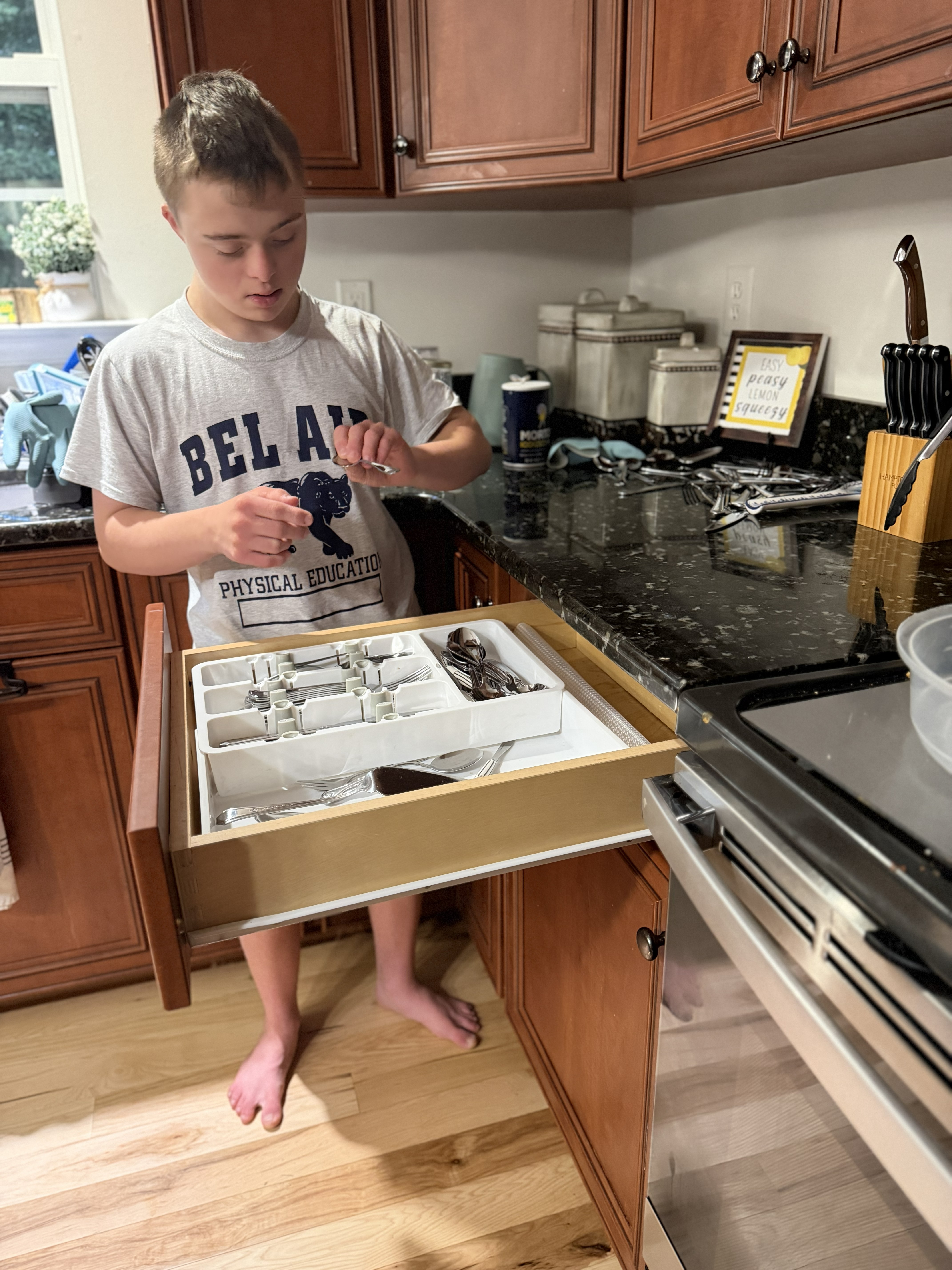
Last summer, while working with an ABA therapist, Noah started learning how to set the table. Here we are a year later, and he is still doing it.
That may not sound like a major accomplishment. He puts plates, napkins, and silverware on the table. Big deal, right?
For us, it is a big deal.
It is another household task Noah can complete independently. Just like any other teenager, he may not particularly enjoy doing it, but he knows it is expected of him and he does it.
And, if I am being completely fair, sometimes he puts the silverware in the correct places better than his sisters.
Of course, Noah always gives himself the giant serving fork. Apparently, being assigned a chore does not mean you cannot upgrade your own place setting. 🍽️
And if he is angry with Pop Shane?
Pop Shane may discover that his place setting mysteriously has no silverware. 😂
Noah still sets the table. He just makes his feelings known through utensil distribution.
Setting the table eventually led to another household responsibility: emptying the dishwasher.
Once Noah understood that chores were something everyone in the house was expected to do, Shane started working with him on unloading the dishwasher.
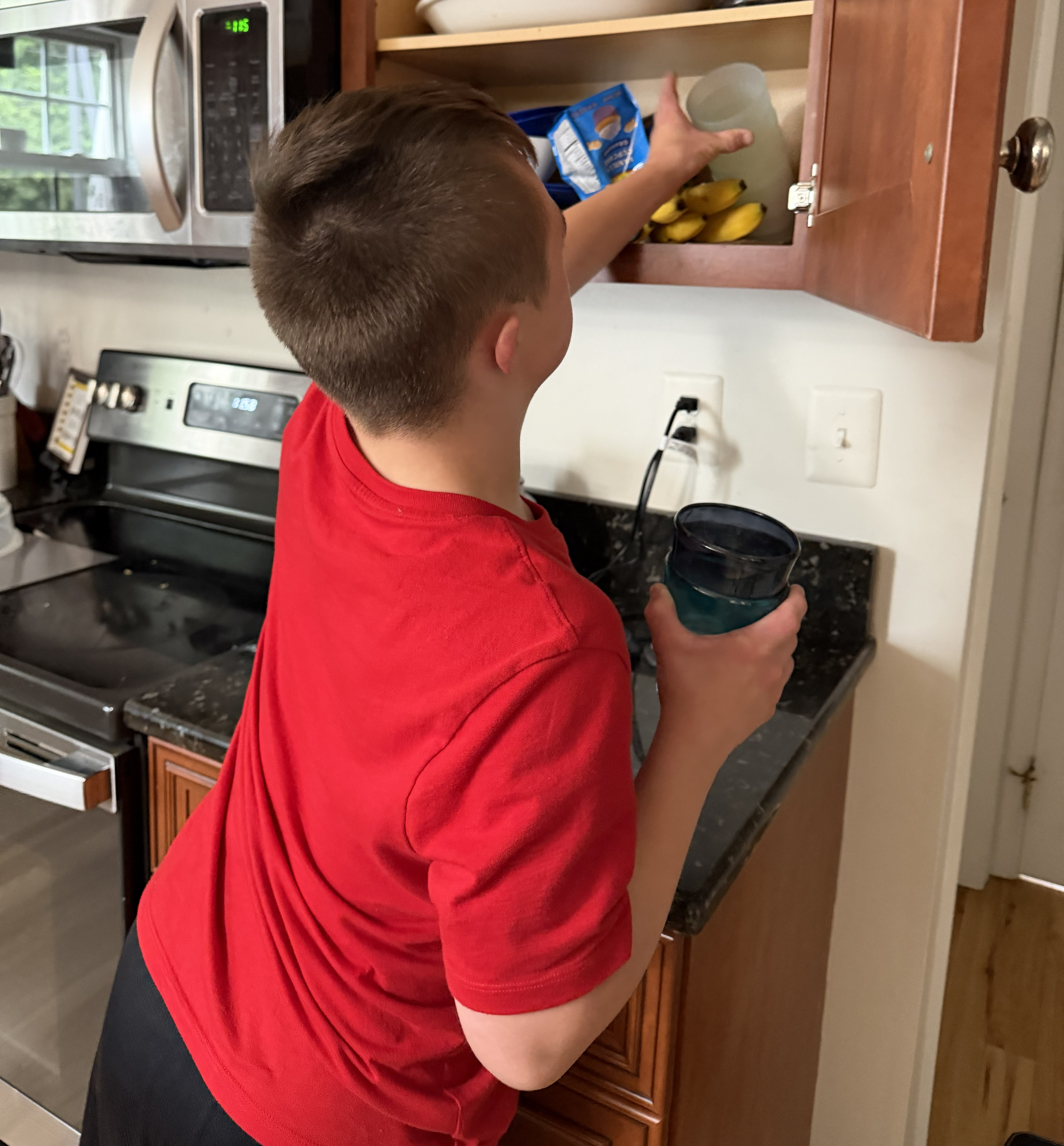
At the same time, Noah has been participating in service learning through school. He has helped in the cafeteria, raked leaves, and assisted at local churches and other community organizations. All of these experiences reinforce the same basic idea: Noah is capable of helping, working, completing tasks, and contributing.
Now, with very little prompting, Noah can empty the dishwasher and put the dishes, glasses, and silverware in the correct cabinets and drawers.
This did not happen overnight.
It took repetition. It took structure. It took expectations. It took the support of school and ABA therapy. And it definitely took the persistence of my husband, who apparently refuses to accept "I have Down Syndrome" as a lifetime exemption from dishwasher duty.
But that is exactly why these seemingly little accomplishments matter so much.
We are not really teaching Noah how to empty a dishwasher.
We are teaching him how to follow a multistep task. We are teaching responsibility. We are teaching independence. We are teaching him that he is a contributing member of our household. Most importantly, we are working on skills that he can carry with him into adulthood.
Sometimes progress does not look like a huge milestone.
Sometimes it looks like an empty dishwasher.
And around here, I will happily take it.
Next stop: laundry.
Although after seeing how Noah distributes silverware when he is angry, I am not entirely sure I am ready to give him control over my clothes.
If ABA therapy is something you think might benefit your child or family member, it may be worth asking your doctor, school team, insurance company, or local providers about available services. Depending on your insurance plan, diagnosis, location, and recommended services, ABA therapy may be covered by insurance. Coverage and requirements vary, so unfortunately there may be a little paperwork involved. Because apparently nothing helpful can happen without paperwork.
If you found this post helpful, please share it with another parent, caregiver, teacher, or family who might find it useful. Sometimes simply knowing that a service exists is the first step toward finding additional support.
And, as always, join the journey to receive updates when new stories, information, and general Noah mischief are posted. Follow us on Facebook to keep up with Noah, share your own experiences, ask questions, or simply laugh along with us.
Because around here, progress may look like an empty dishwasher today.
Tomorrow, we tackle laundry.
Maybe.