Preparing Your Child for Schedule Changes: Simple Strategies That Make a Difference
Preparing your child for life’s constant plot twists is not for the faint of heart. Schedules change, plans fall apart, and somehow Monday always shows up way too soon. For many kids, this is mildly annoying. For others, like my son Noah, it is a full production.
Children thrive on routine and consistency. There is comfort in knowing what comes next. Schools understand this and often use picture schedules to guide the day. At home, many of us try to do the same. But what happens when your child needs that structure not just as a preference, but as a requirement for success well into adulthood? And what happens when transitions feel less like a small step and more like a cliff?
For Noah, transitions are not his favorite hobby.
We really saw this during COVID, when routines disappeared and every day felt like a surprise nobody asked for. Since then, I have learned a few things. I am not an expert. I am just a mom who has tried things, failed at things, and occasionally stumbled into something that actually works.
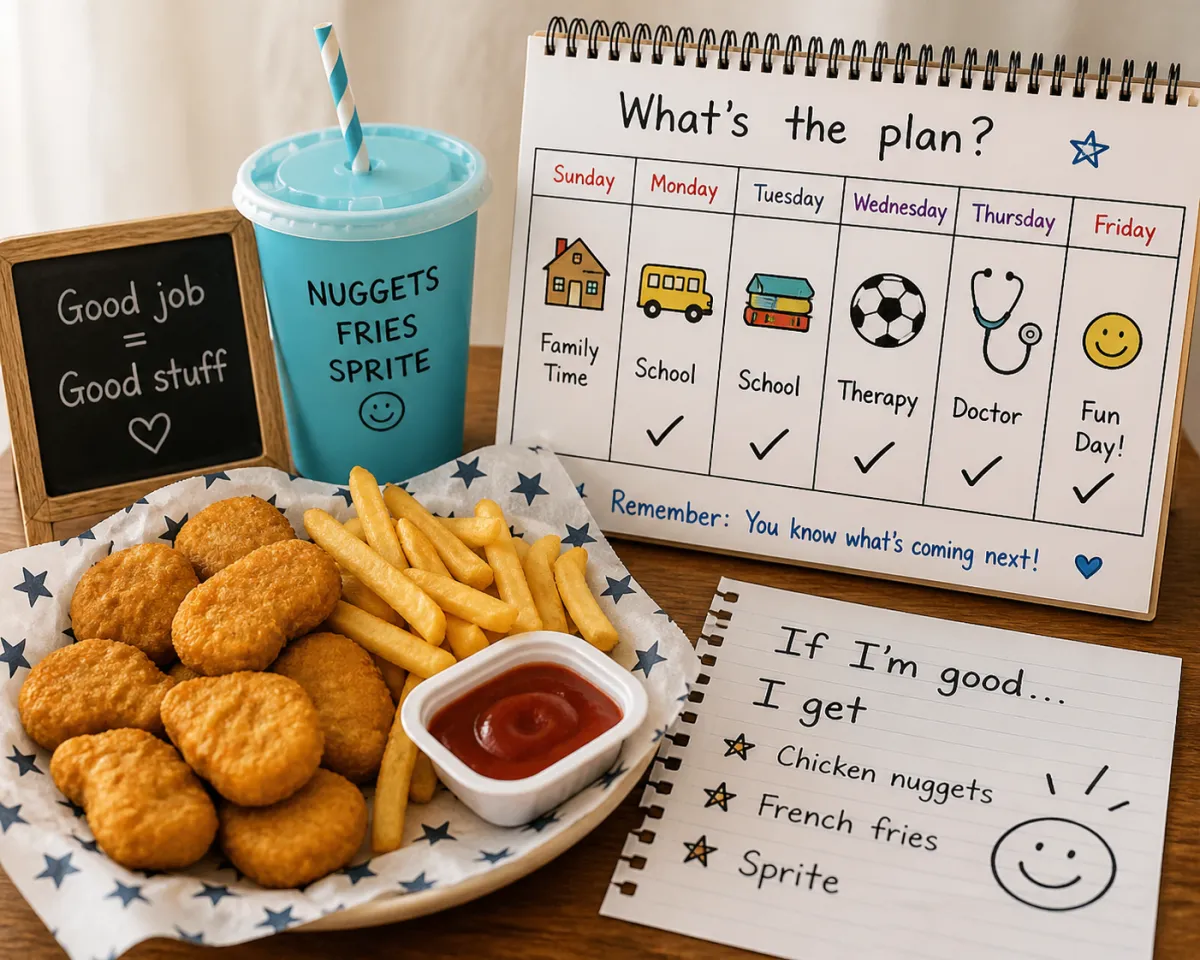
One strategy that helps is preparing Noah early and often. On Sundays, I start talking about Monday like it is a big event, because to him, it is. I tell him he has school the next day. If there is a special theme day or event, I include that detail. Then we repeat it. Several times. Because one reminder is never enough.
Noah will usually ask, “Where are we going?” This is my cue to calmly repeat, “It is Monday. You are going to school.” Think of it as a gentle, ongoing advertisement for the next day.
The same approach works for appointments. If Noah has a doctor visit, I tell him the day before and again the morning of. I explain exactly what will happen. The pediatrician will listen to his heart, check his ears, look at his eyes. No surprises. Or at least fewer surprises.
When it comes to the less fun parts, like shots or tests, I prepare him and add a little motivation. I might say he may need a shot, but if he does a good job, we will stop for a treat. This system works beautifully… until it does not.
Take today, for example. Noah was promised french fries and a sprite for good behavior. Seemed reasonable. The nurse came in with the shot, and suddenly Noah decided inflation had hit his reward package. He looked at me and confidently upgraded his order to chicken nuggets, french fries, and a sprite. The nurse laughed. I considered my life choices. Noah stood firm. Negotiations were not optional.
This is the reality. Preparation helps, but children are still children. Sometimes they move the goalposts.
If you are navigating similar challenges, a few ideas that may help:
Use visual supports like picture schedules or written plans.
Give frequent reminders leading up to a change.
Be specific about what will happen, not vague.
Build in small rewards or incentives.
Keep your responses calm and consistent, even during negotiations over chicken nuggets.
Most importantly, remember that every child is different. What works one day may not work the next. Flexibility is key, even when your child is not feeling flexible at all.
And always keep extra nuggets in mind. Just in case.