Stimming Part 1: More Than Just Making Noise New Blog Post
For years, I thought Noah was simply being... well... Noah.
The random noises, the head bobbing, the repetitive sounds. I figured it was just another one of his many quirky personality traits. Do not get me wrong. Noah is absolutely quirky, and I would not change that for the world. But over time I learned that many of those behaviors were actually something called stimming, or self stimulatory behavior.
Stimming is very common in people with Down Syndrome, Autism, and other sensory differences. It is often a way to regulate emotions, process sensory information, calm anxiety, or sometimes express excitement. It is not always something that needs to be stopped. Many times, it is simply how their brain helps them cope with the world around them.
The interesting part is that stimming looks different for everyone.
Some people rock back and forth. Others flap their hands, hum, repeat words or phrases, make loud noises, bounce, spin, or move their heads in repetitive ways. There is no single "Down Syndrome stim" or "Autism stim." Just like every child is different, every person's stimming is different too.
As parents, we slowly become detectives. 🔍
Just like you eventually learn the difference between a baby's hungry cry and tired cry, or you somehow know your dog is standing by the back door because he has to go outside instead of because he wants another treat, you also begin to recognize what your child's different stims might be trying to tell you.
One repetitive sound might mean Noah is excited.
Another might mean he is overwhelmed.
A different one might mean he is anxious.
Sometimes it simply means he is happy and entertaining himself.
Then, just when you think you have finally cracked the code...
Everything changes.
A new behavior appears, an old one disappears, puberty shows up to complicate things even more, and suddenly you are back to square one trying to figure out what your child is communicating. Parenting is basically one long game of "Guess What I Mean." Parenting a child with special needs just comes with a few extra levels.
When I first read about stimming, I honestly had no idea what it looked like in real life. Then one day it hit me.
Wait...
That is exactly what Noah has been doing.
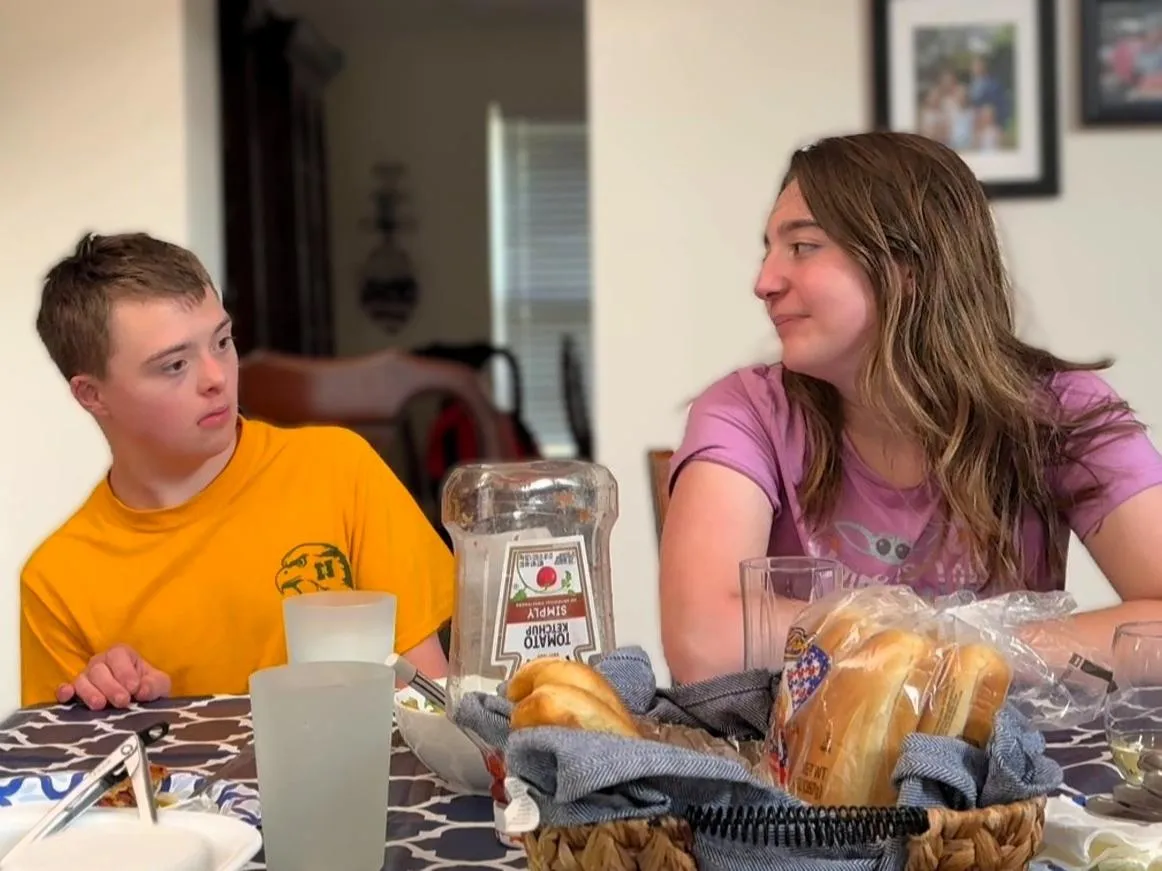
The video below was taken during dinner a few nights ago. Noah repeatedly moves his head back and forth. The specific movement may be unique to Noah, but the repetitive nature of it is a classic example of stimming.
Of course, his older sister Ilyia could not simply sit there and watch. She immediately joined in, because siblings have a special talent for encouraging just enough mischief to keep life interesting.
I even added some music because if we are going to learn about stimming, we might as well enjoy ourselves while doing it.
Living with Noah has taught me that behavior is communication. Sometimes the message is easy to understand. Sometimes it takes a little detective work. And sometimes... it takes several years before you realize what your child has been trying to tell you all along.
If this post made you laugh, taught you something new, or reminded you that you are not alone, please share it with a friend, family member, teacher, therapist, or anyone who loves or works with individuals with disabilities. The more we share our stories, the more understanding and acceptance we create.
Be sure to follow us on Facebook for Noah's latest adventures, everyday mischief, and the moments that never quite make it into the blog. If you have not already, Join the Journey by subscribing to the blog so you receive an email whenever a new post is published. We would love to have you along for the ride.