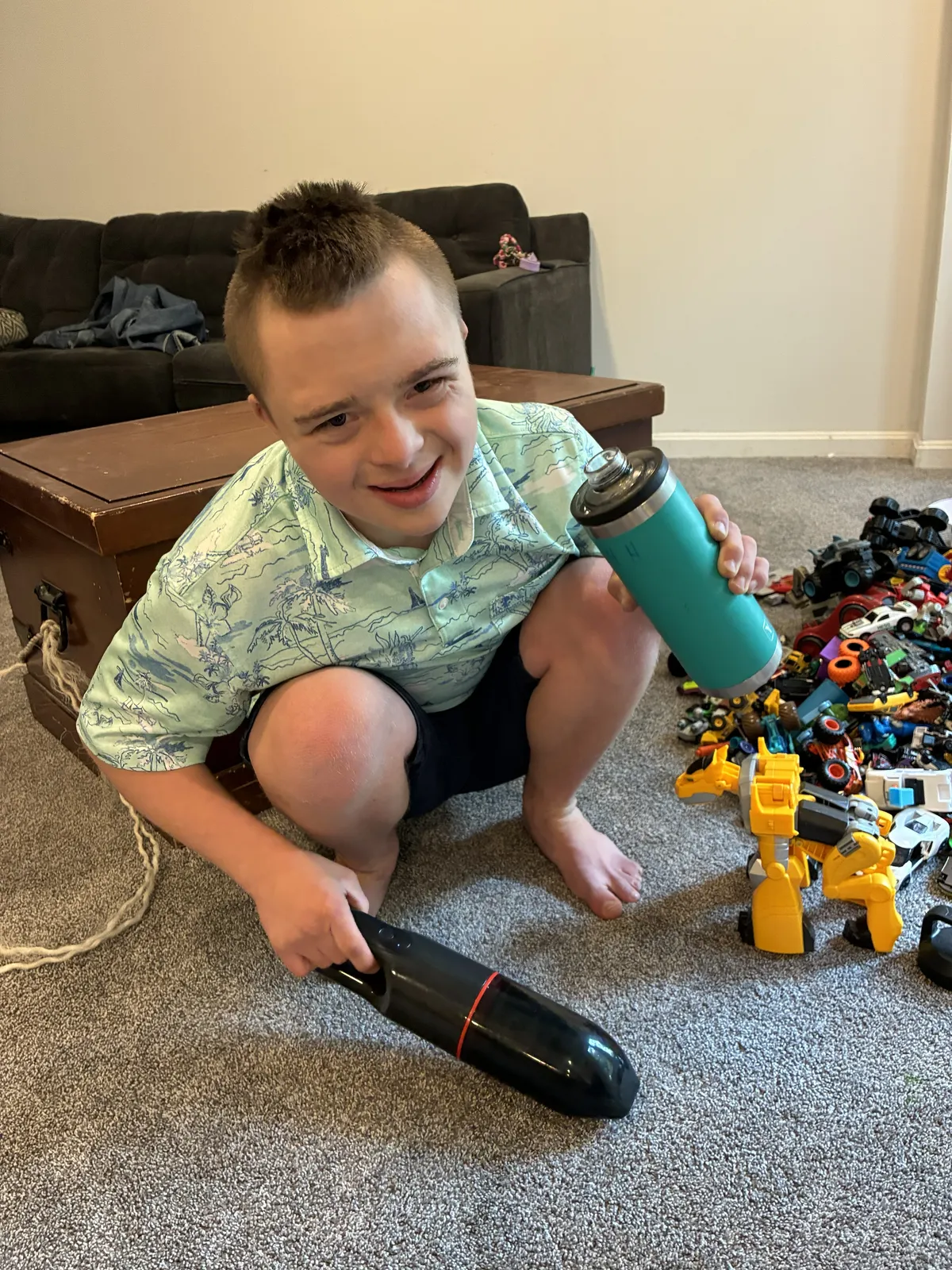
What is Noah Trying to Tell Us?
I am sharing this story because it is a clear example of how things are not always what they seem. Life with Noah is not always funny or simply frustrating. Sometimes it is difficult, emotional, and heartbreaking.
When Tantrums Become Something More
Parents, guardians, teachers, therapists, and anyone who works with children understand that children go through different phases. When they are young, they may have temper tantrums because they are tired, hungry, frustrated, or did not get their way. There are probably one hundred other possible reasons.
As children grow, most learn how to identify what they are feeling and communicate those feelings. The temper tantrums may become less frequent or even stop, at least until the teenage years, but that is a story for another day.
What Happens When a Child Cannot Explain?
What happens when your child is fifteen and cannot explain what he is feeling? What happens when he does not understand why he is angry, what is hurting, or why he feels sad?
That is the stage we are currently navigating with Noah.
Noah can speak and generally uses his words to ask for specific things. He can tell us that he wants to go outside, ask for something to eat, or request a hug. However, he struggles to understand why he feels a certain way and then communicate that feeling to someone else.
Sometimes the Answer Is Simple
Several months ago, Noah began getting angry with me after school. His version of a breakdown often begins with him saying, “Please shut up.” Yes, he says please. He may then begin to spit or become increasingly agitated.
That afternoon, I realized that he had come home from school and had not eaten a snack. Like most teenage boys, Noah seems to be hungry constantly.
I asked, “Noah, are you hungry?”
He paused, calmed down, looked at me, and said, “Yes.”
I explained that he needed to tell me or Pop Shane that he was hungry so we could get him a snack. In that moment, we were able to identify the problem and meet the need.
Unfortunately, the solution is not always that simple.
Then Sunday Night Was Different
Over the weekend, Ziva, Shane, and I repeatedly reminded Noah that he would be returning to school on Monday. We asked whether he was excited to see his friends and his teacher. He was returning to the same school, classroom, teacher, and classmates. Consistency is usually very helpful for Noah.
Each time we mentioned school, Noah said, “No,” and waved his hand. He did not become overly upset, so we continued preparing him as we normally would.
Then, on Sunday night, everything changed.
We have a very consistent bedtime routine. Routines are helpful for all children and probably most adults, but they are especially important for children like Noah. We prompted him to come upstairs for prayers, brushing his teeth, changing into pajamas, and getting ready for bed.
Noah completely lost control.
Shane has been trained to hold Noah in a secure position that prevents Noah from hurting himself or someone else. The incident lasted almost ten minutes. Noah became so angry and upset that he developed a nosebleed.
Once he calmed down enough, we went upstairs, said our prayers, and encouraged him to take a shower. Showers often help calm his body and his nerves. He also had blood on himself from the nosebleed.
After his shower, Noah asked me to sit beside him in bed. This was highly unusual. Noah has never been much of a cuddler, even when he was younger.
He began to cry.
This was not screaming or crying out of anger. He was crying from frustration and sadness. My heart broke because it was clear that something was wrong, but he could not tell me what it was.
I wanted to help him, but I did not know what he needed.
So Many Questions and No Answers
Shane wondered whether Noah was anxious about returning to school. Maybe he was, but how could we know?
Was he in pain? Did he have a headache after the nosebleed? Were his sinuses bothering him? Had his ear infection returned? Was his stomach upset?
We had so many questions and no answers.
Helping Noah Find the Words
Noah and his behavioral therapist are working on identifying and communicating emotions. We practice at home, and I know his teachers use social stories and other strategies at school. Still, feelings can be difficult to recognize, understand, and explain.
As a parent, it is painful to watch your child struggle and not know how to help. Behavior is often communication, but understanding what is being communicated is not always easy.
Sometimes we can identify the need and offer a snack. Other times, we are left trying to solve a puzzle without all the pieces.
What Has Helped Your Family?
I am sharing this because I know our family is not the only one navigating this challenge. If your child or someone you support struggles to identify and communicate emotions, what has helped? Are there books, visual tools, social stories, communication techniques, or other strategies that have worked for your family?
Ideas and suggestions are always appreciated. Please share your experiences in the comments or on our Facebook page. If you know another parent, guardian, teacher, or caregiver who may relate to this story, please share this post with them.
By sharing what has worked, we may help another family feel less alone and give them one more tool to try.