Stimming Part 3: Looking Back with Different Eyes
Stimming Part 3: Looking Back with Different Eyes
Over the past couple of weeks, I have shared what stimming is, what it looks like in our house, and why it can sometimes leave the rest of the family searching for the nearest pair of noise canceling headphones.
As I look back over the years, there is one thing I keep thinking.
I wish I had understood all of this sooner.
For the longest time, I honestly believed Noah was making noise because he wanted attention. I thought he was trying to be funny, annoying, or maybe just seeing how long it would take before someone finally said, "Enough already!"
To be fair...
There are still days when I ask him to stop. I tell him to lower his voice or head downstairs for a little while if everyone else needs some quiet.
He usually smiles.
He tells me, "Okay."
Then he continues right on with his noise making journey as if we never had the conversation.
Some things never change.
The difference is that now I see those moments differently.
I no longer believe Noah is intentionally trying to drive everyone crazy. Instead, I realize he is communicating in the best way he knows how.
The hard part is that Noah cannot always tell me what he is feeling.
He cannot say, "Mom, I am overwhelmed."
He cannot explain that he is anxious, overstimulated, excited, frustrated, or simply trying to make sense of everything happening around him.
Many times, he does not even realize that is what he is doing.
Instead, his body does the talking for him.
And for years...
I did not know how to listen.
Do I suddenly enjoy listening to repetitive noises for an hour?
Absolutely not.
Do I still ask Noah to quiet down, take a break downstairs, or redirect him to something else?
Of course.
I am still a mom, and there are four kids, two adults, and one dog living under the same roof. Everyone has their limits.
The difference is that I now understand why I am asking him to redirect instead of assuming he is simply misbehaving.
Years ago, I thought Noah was choosing to make noise because he wanted attention or because he thought it was funny. Now I realize he is often meeting a need that he cannot explain with words.
That does not mean I never redirect him. It simply means I approach those moments with a little more patience and a lot more understanding.
I also hope that understanding extends far beyond our home.
Teachers.
Grandparents.
Neighbors.
Friends.
Cashiers standing in line at the grocery store.
People sitting in the next booth at a restaurant.
The family walking through the grocery store.
Most of us have probably looked at a child and made assumptions about their behavior. I know I did before Noah came into my life.
The more we understand why behaviors happen, the less likely we are to judge the child or the parent standing beside them.
Instead of asking, "Why does that child keep doing that?" perhaps we should ask, "What might they be trying to communicate?"
Sometimes changing the question changes everything.
Noah has taught me many things over the years.
Patience.
Flexibility.
Humility.
The importance of celebrating the little victories.
How to laugh when life does not go according to plan.
And perhaps one of the greatest lessons of all...
Not every behavior needs to be fixed.
Sometimes it simply needs to be understood.
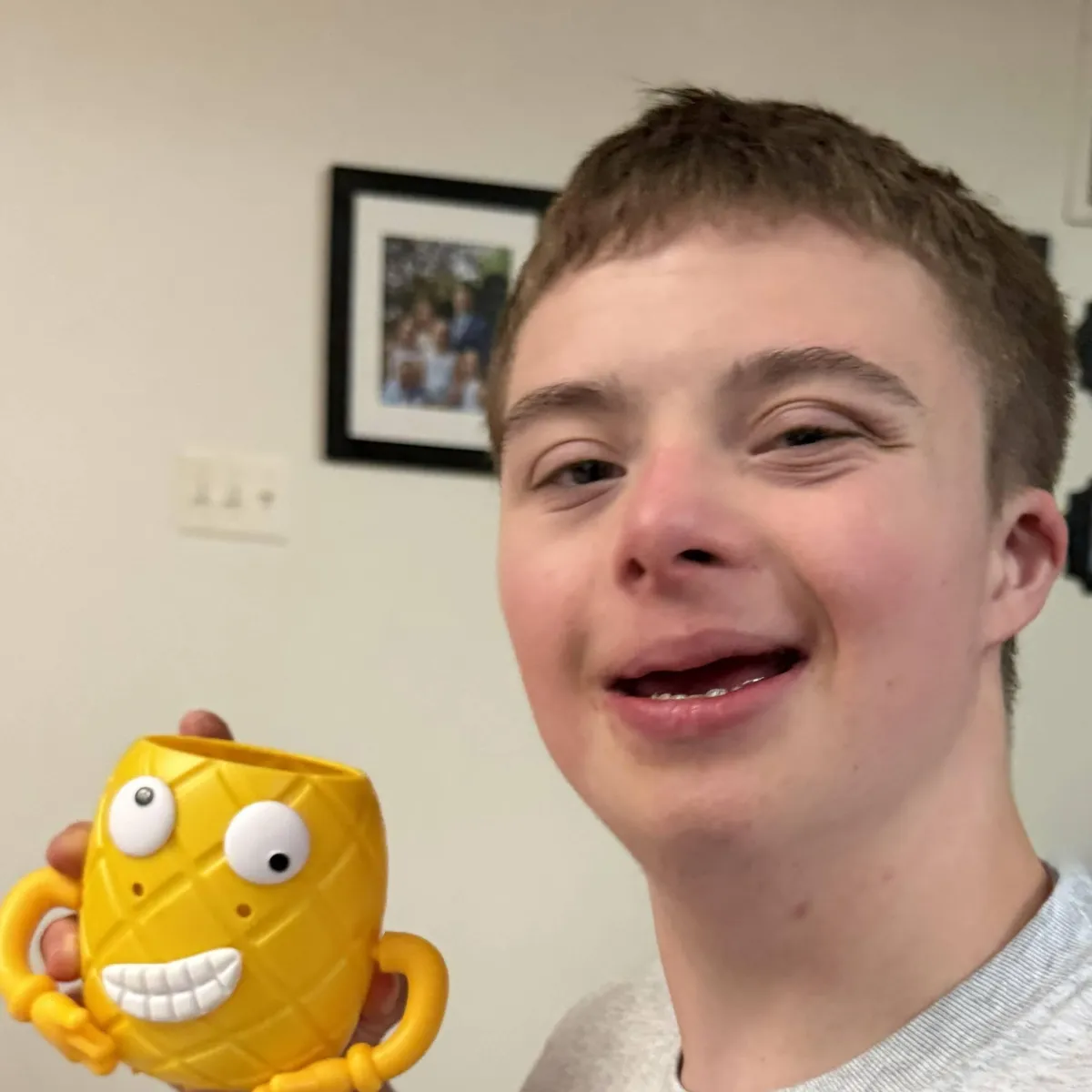
If you ask Noah why he is rocking or making noise, you probably will not get an answer. He will likely smile, laugh, or tell you he is "just Noah." And maybe that is the best answer of all. Noah does not spend his days worrying about whether he fits into everyone else's definition of normal. He simply wakes up each day and lives life as Noah. There is something we can all learn from that.
If you would like to learn more about stimming, sensory processing, or supporting individuals with Down Syndrome and other developmental disabilities, here are a few excellent resources:
National Down Syndrome Society (NDSS)
https://www.ndss.org
National Down Syndrome Congress (NDSC)
https://www.ndsccenter.org
Global Down Syndrome Foundation
https://www.globaldownsyndrome.org
Autism Speaks: Understanding Stimming
https://www.autismspeaks.org
The OT Toolbox
https://www.theottoolbox.com
Thank you for following along with this three part series. My hope is that it has helped you better understand stimming and perhaps look at repetitive behaviors through a different lens. While every individual is unique, one thing remains true: behavior is often communication, even when words are hard to find.
If this series made you laugh, taught you something new, or reminded you that you are not alone, please share it with a friend, family member, teacher, therapist, or anyone who loves or works with individuals with disabilities. The more we share our stories, the more understanding and acceptance we create.
Be sure to follow us on Facebook for Noah's latest adventures, everyday mischief, and the moments that never quite make it into the blog. If you know someone who would enjoy following Noah's journey, encourage them to Join the Journey on our website to receive an email whenever a new blog is published. We would love to have them along for the ride.